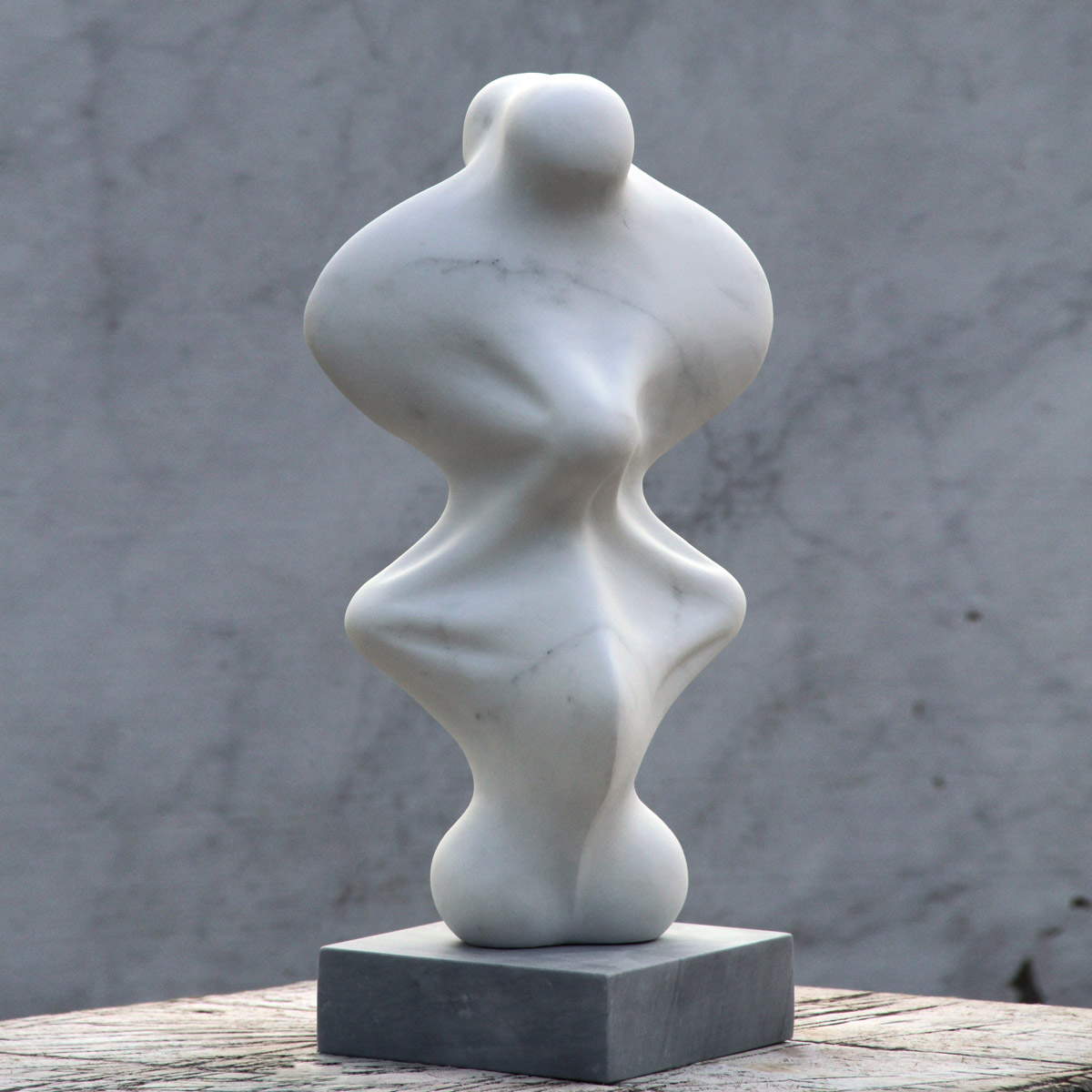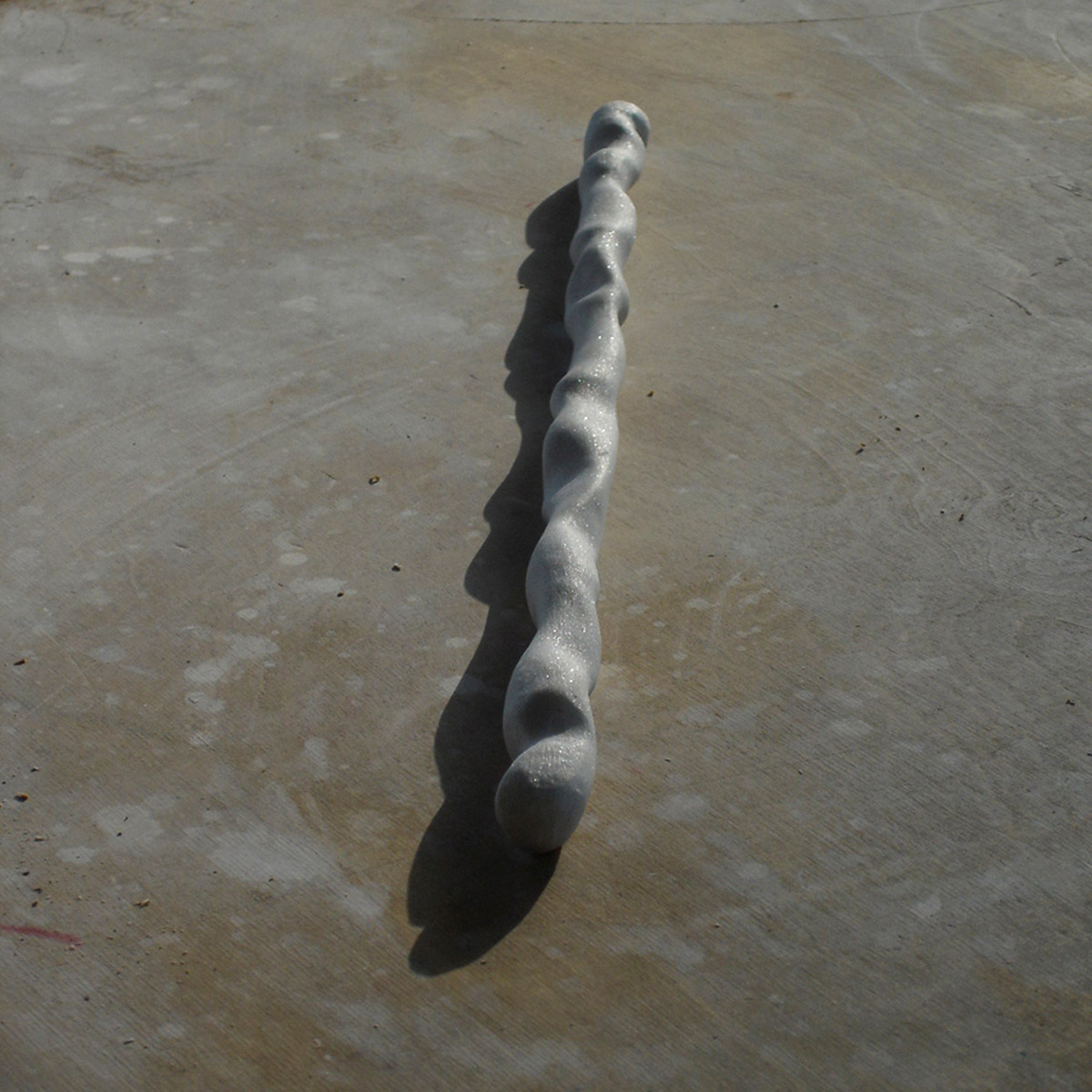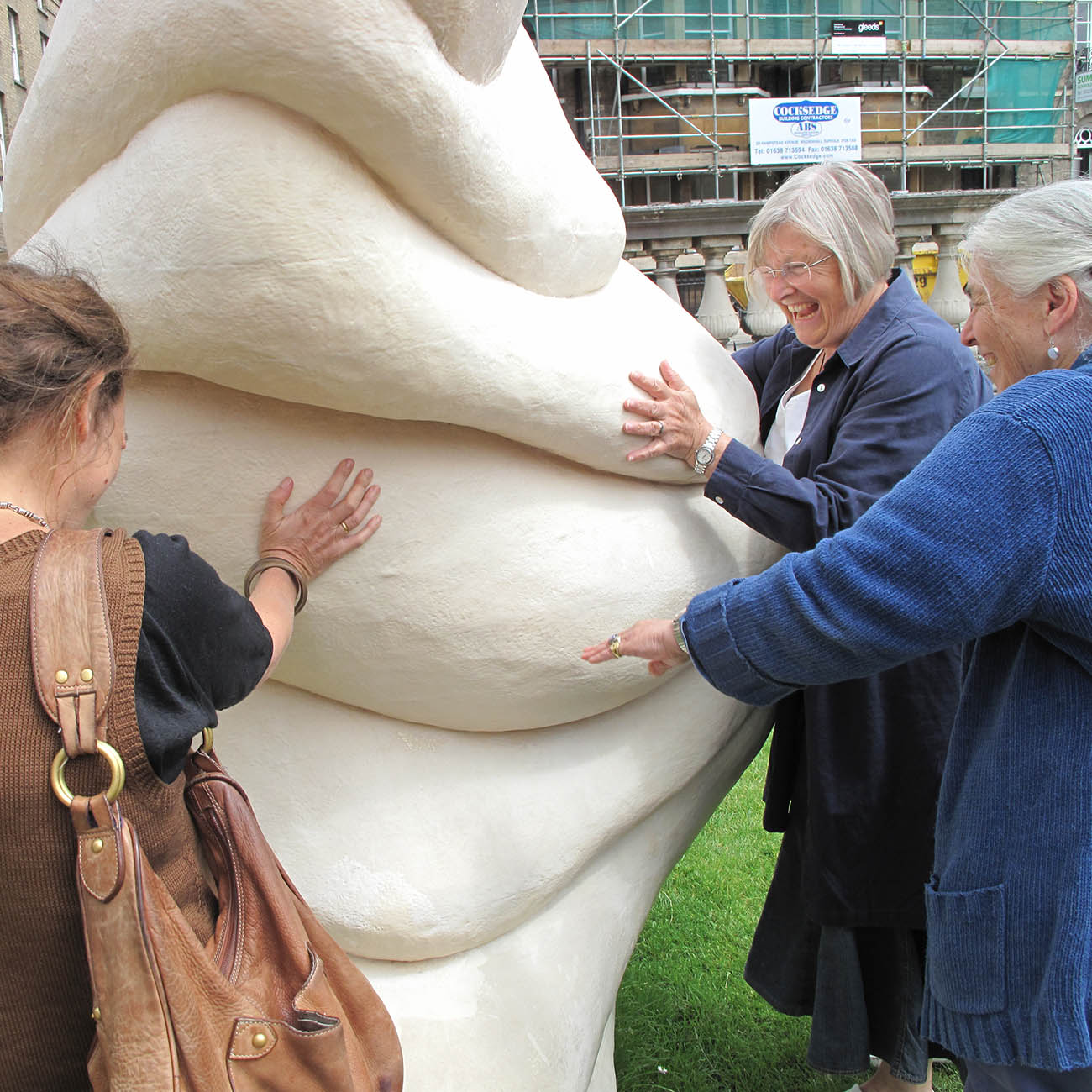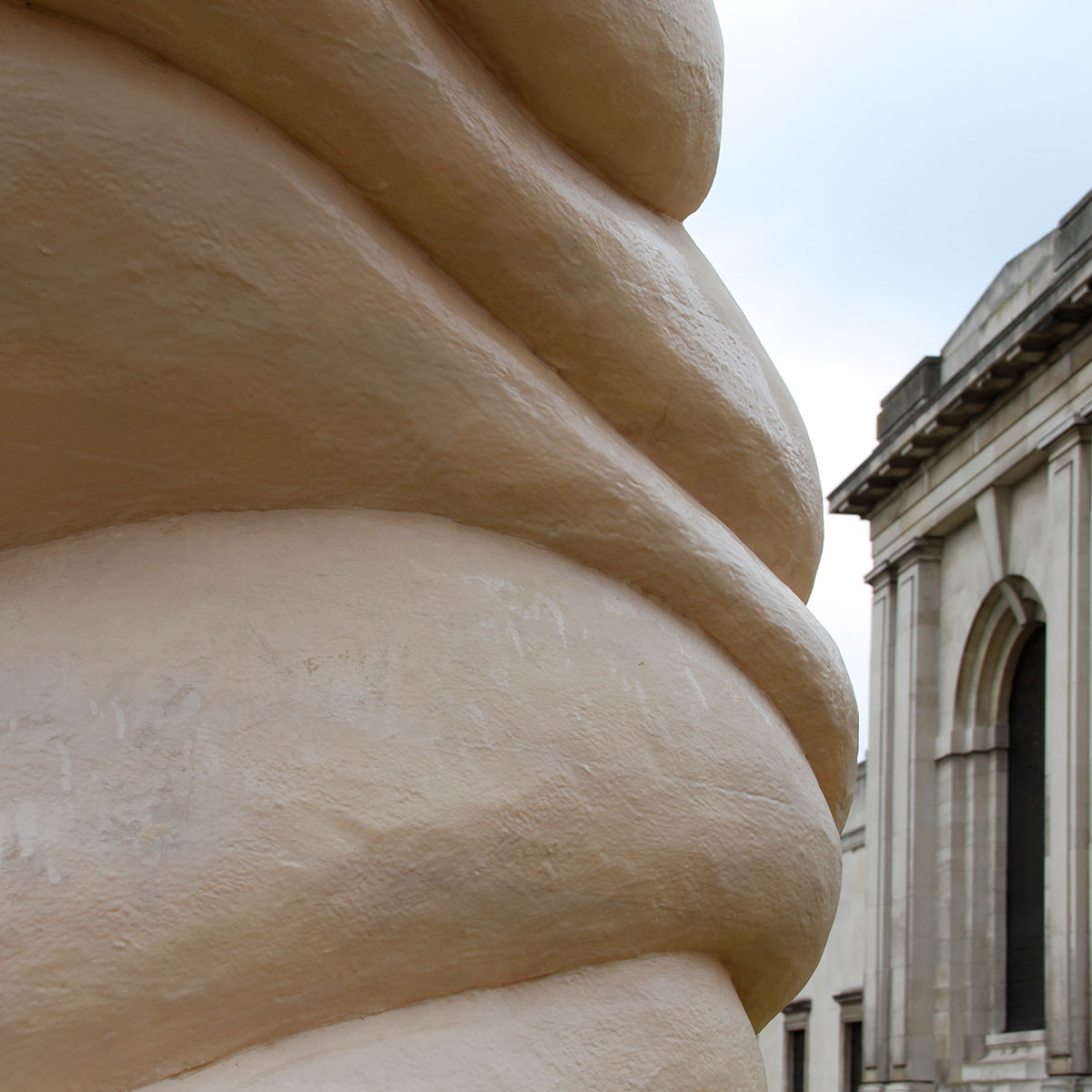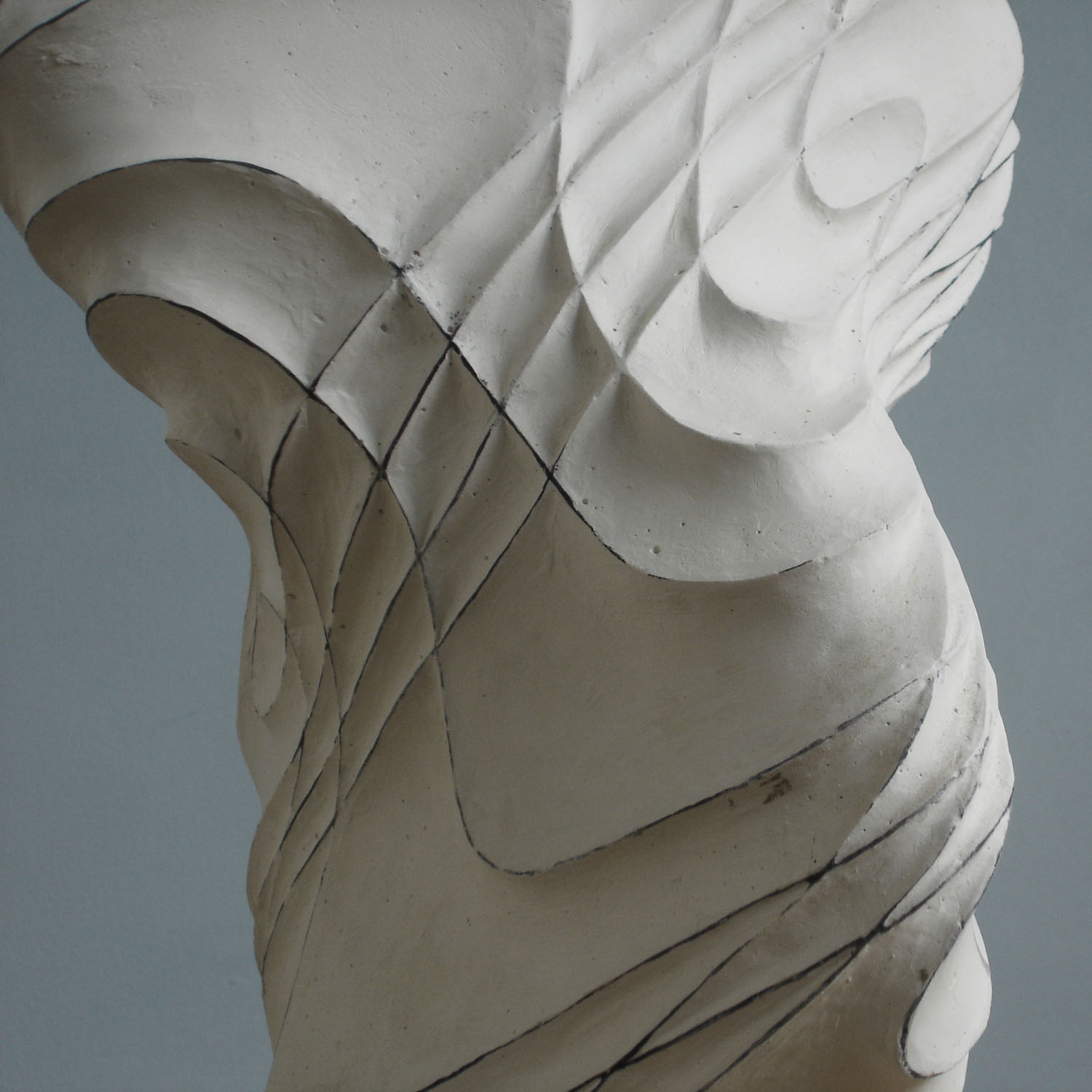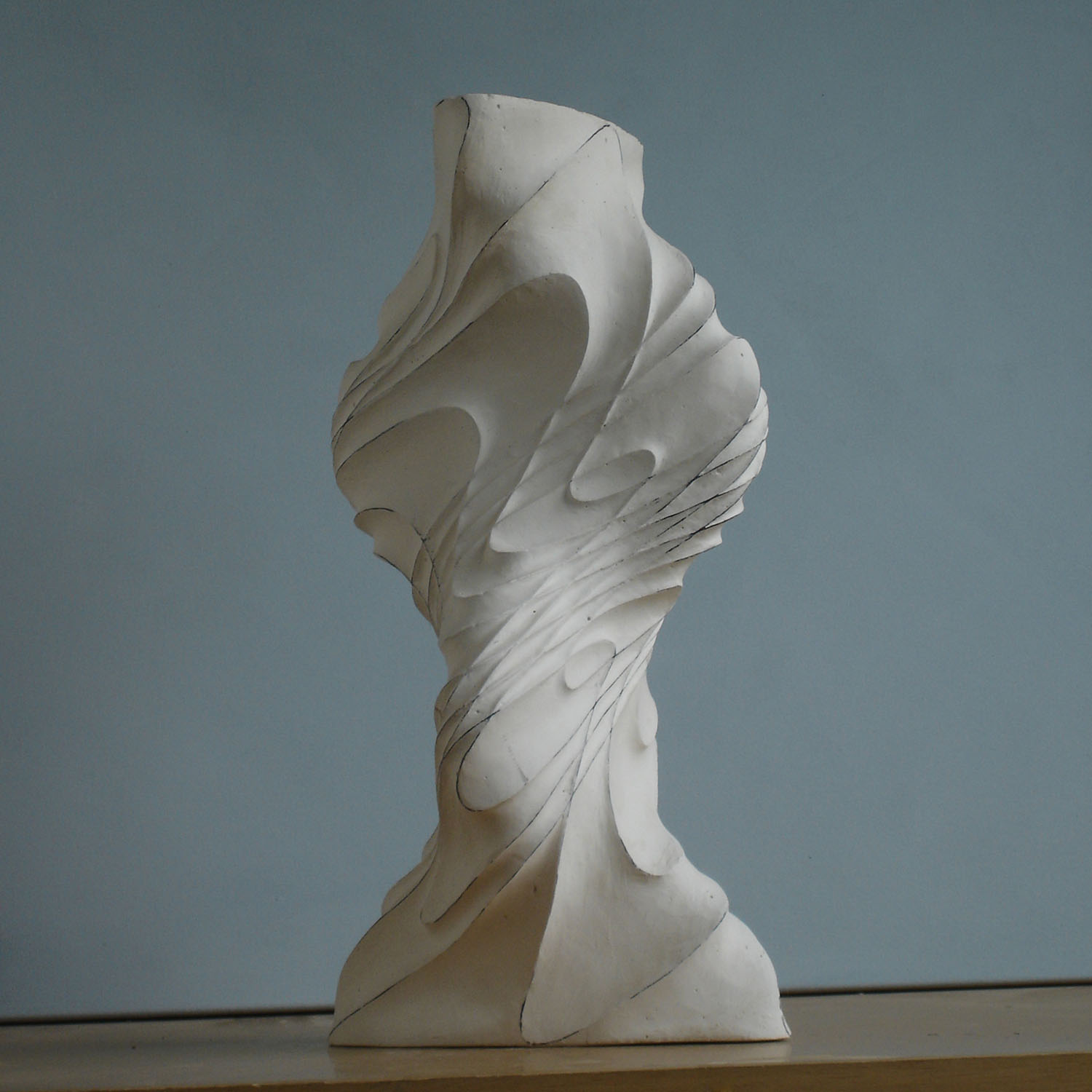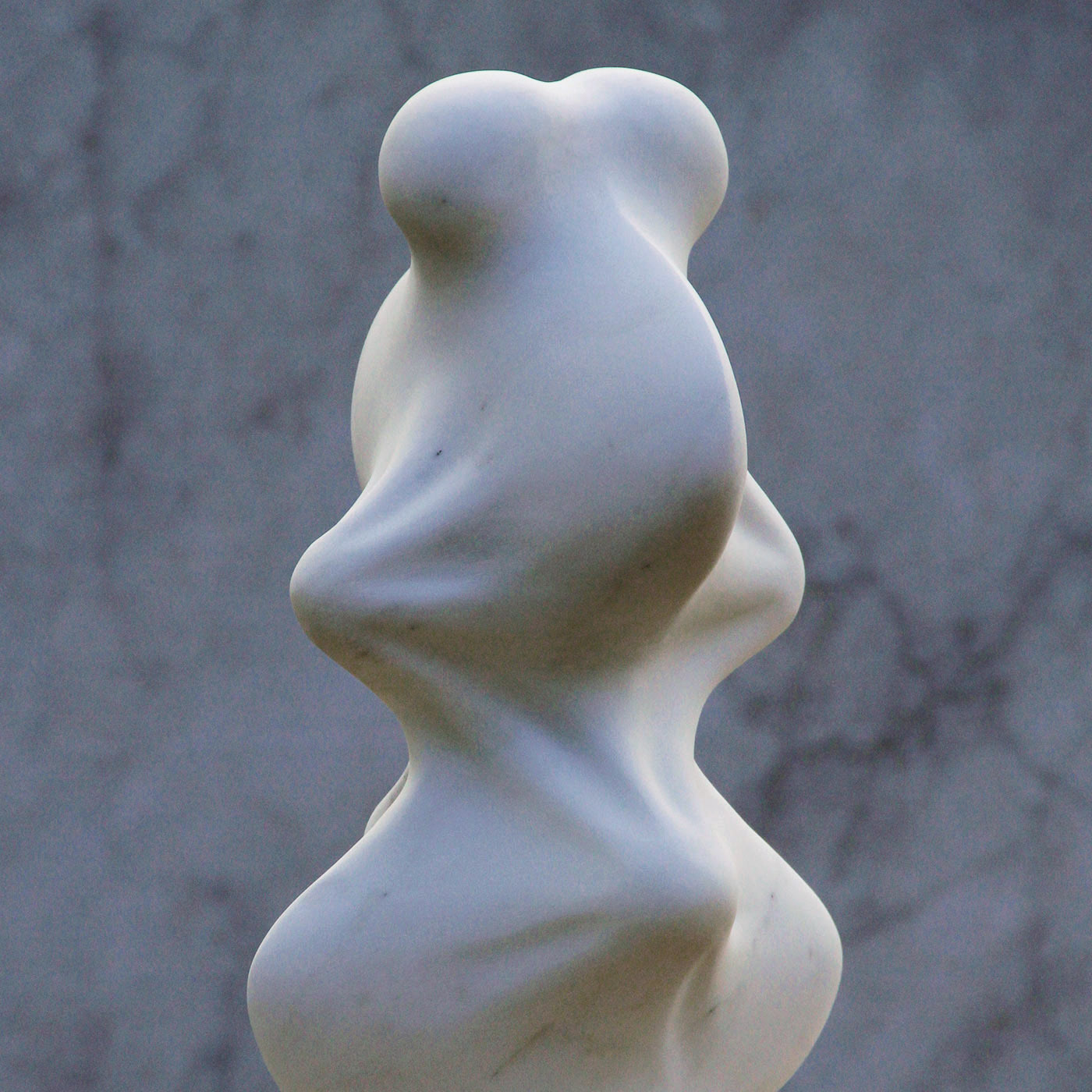
2010. White marble. 57 x 20 x 20 cm.
Tag: rhythmic
-
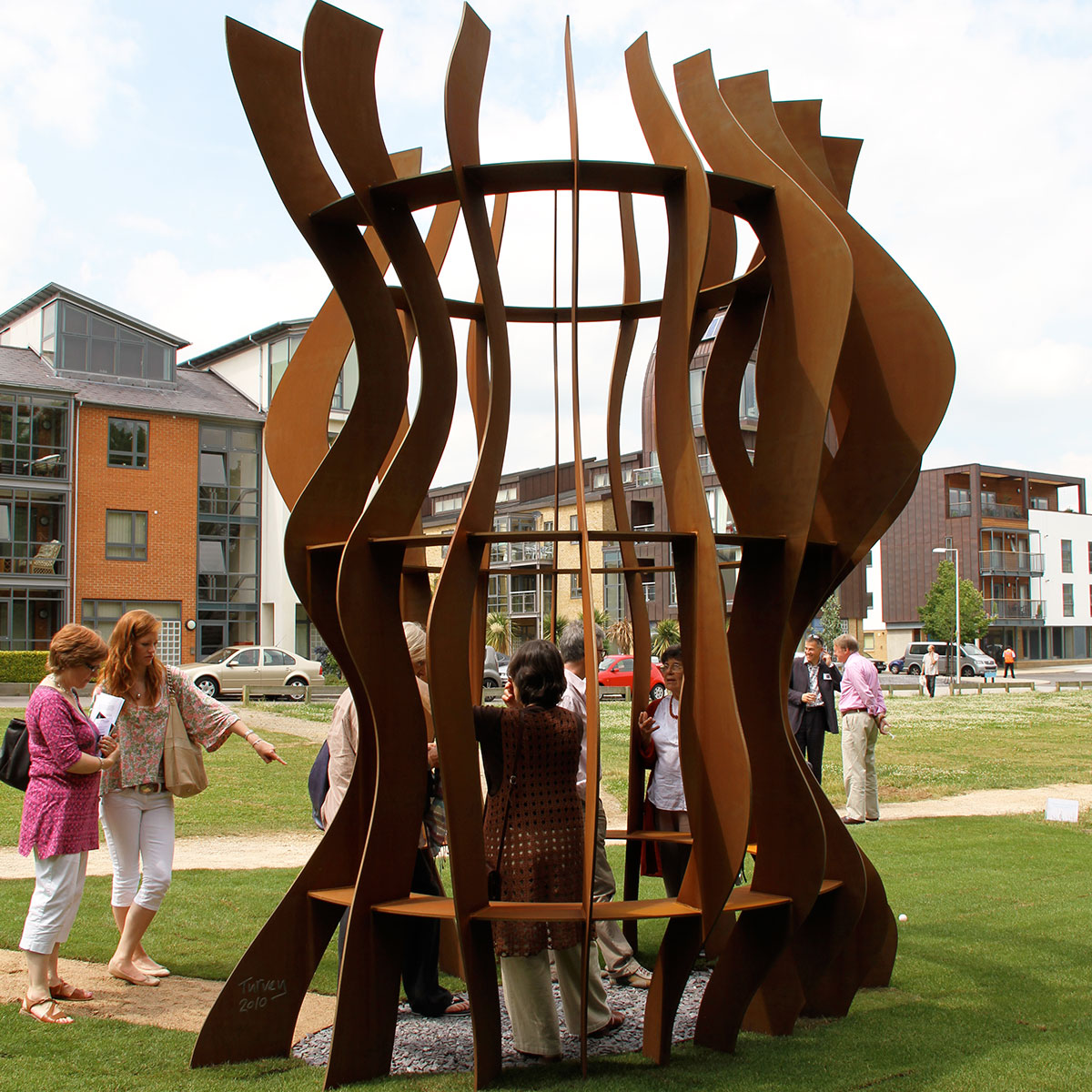
Methuselah
2010. Corten steel. 320 x 320 x 400 cm.
Interesting properties emerge at the interface where one kind of order meets another. You could call it algorithmic form, a cognitive hack of the eye and brain to exploit our figurative bias, akin to the mathematical simulation involved in image compression.
Acquired by Newhall Projects for the Harlow Art Trust collection, and permanently installed in the new park at the centre of Newhall. To visit, drive to the end of The Chase, CM17 9JA. A map of Harlow’s extensive sculpture collection can be downloaded from here or here.
-
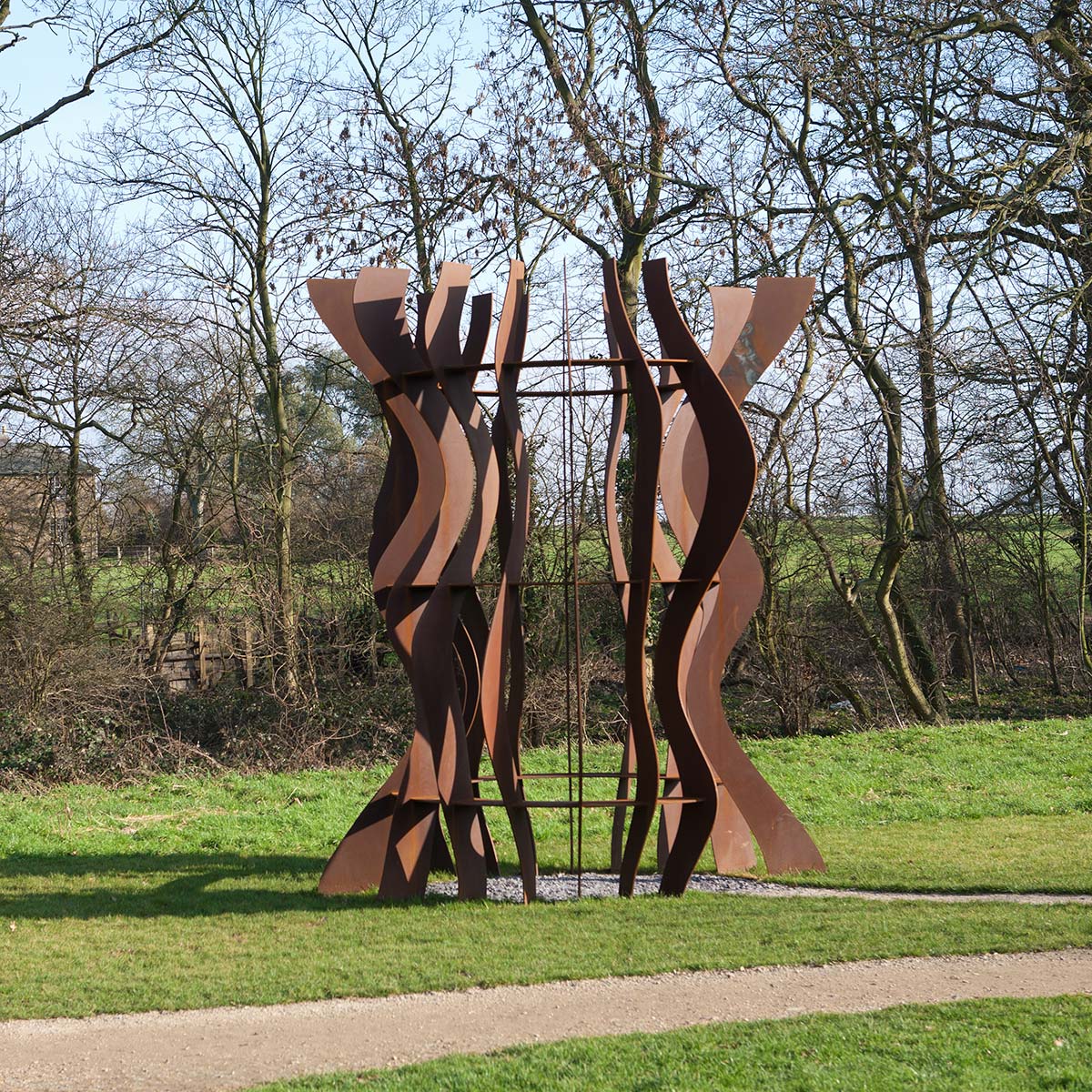
Methuselah
2010. Corten steel. 320 x 320 x 400 cm.
Interesting properties emerge at the interface where one kind of order meets another. You could call it algorithmic form, a cognitive hack of the eye and brain to exploit our figurative bias, akin to the mathematical simulation involved in image compression.
Acquired by Newhall Projects for the Harlow Art Trust collection, and permanently installed in the new park at the centre of Newhall. To visit, drive to the end of The Chase, CM17 9JA. A map of Harlow’s extensive sculpture collection can be downloaded from here or here.
-
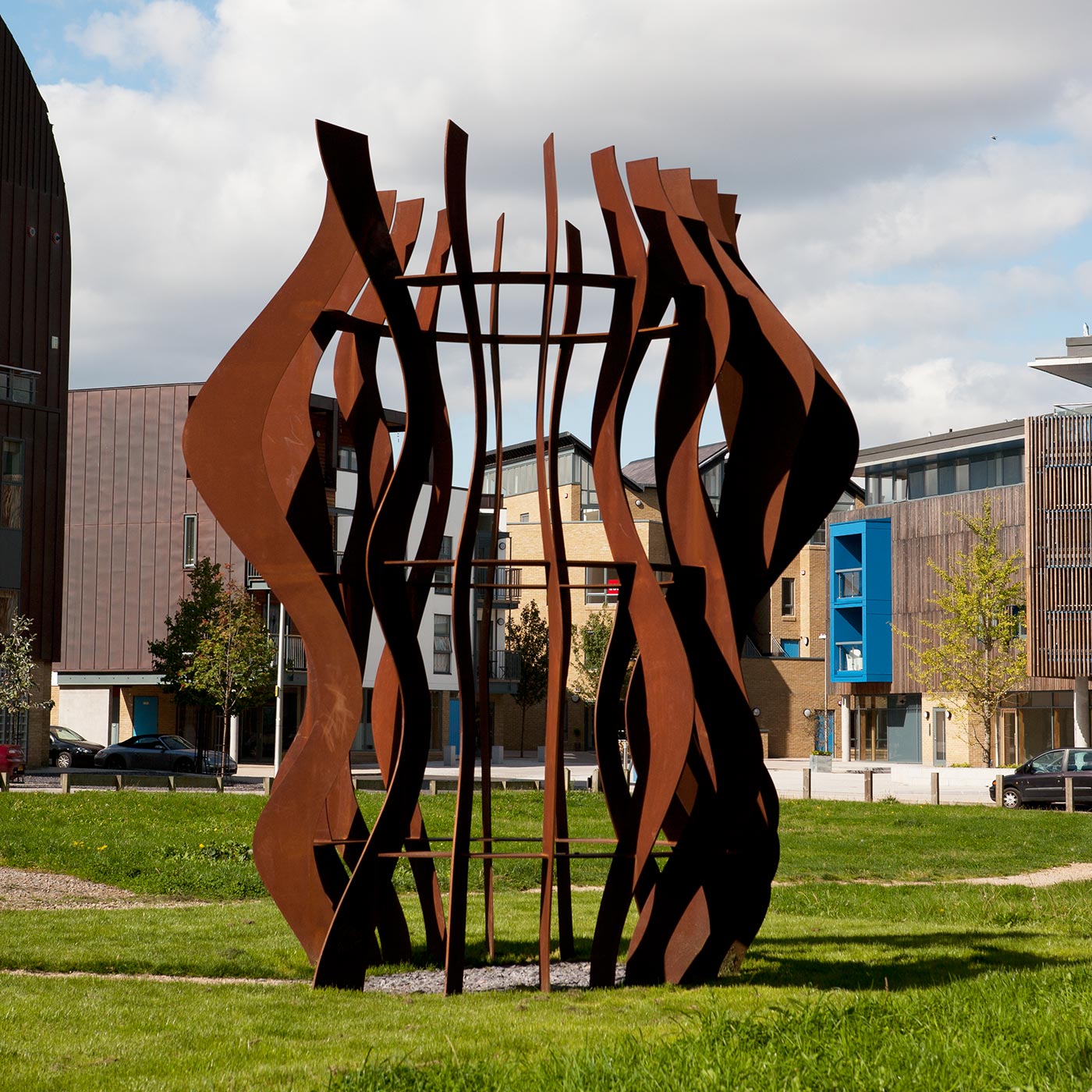
Methuselah
2010. Corten steel. 320 x 320 x 400 cm.
Interesting properties emerge at the interface where one kind of order meets another. You could call it algorithmic form, a cognitive hack of the eye and brain to exploit our figurative bias, akin to the mathematical simulation involved in image compression.
Acquired by Newhall Projects for the Harlow Art Trust collection, and permanently installed in the new park at the centre of Newhall. To visit, drive to the end of The Chase, CM17 9JA. A map of Harlow’s extensive sculpture collection can be downloaded from here or here.
-
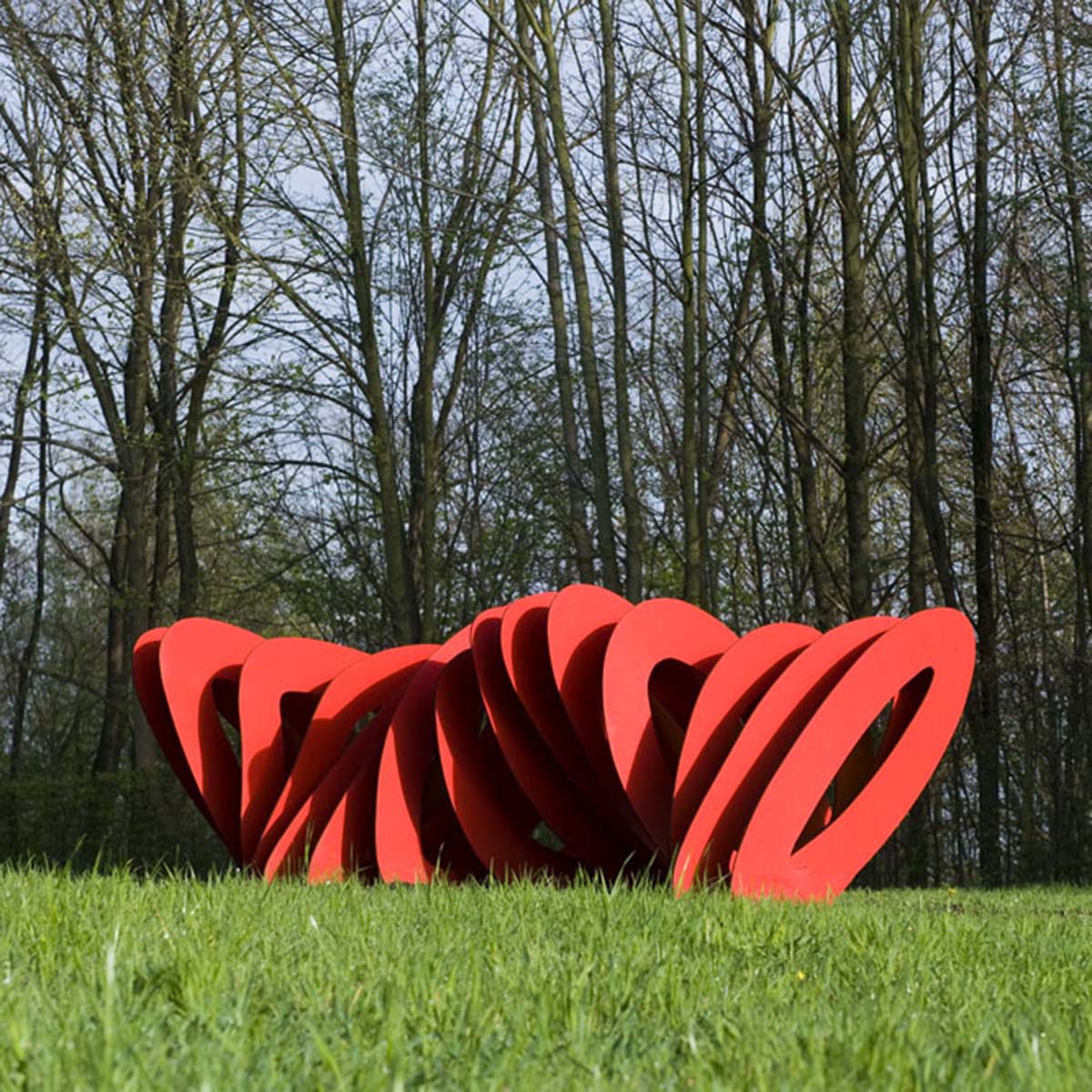
Chief
2010. Corten Steel & enamel paint. 400 (l) x 135 (w) x 170 cm (h)
The timeless word ‘Chief’ aims to provoke reflections on our need for heroes, and this toppled giant, slumped in defeat, alludes to propagandist embodiments of power laid low, the pathos of the heroic body. There is something clearly skeletal about the form, which, just like historical or political reputations, appears and dissolves, depending on one’s point of view.
-
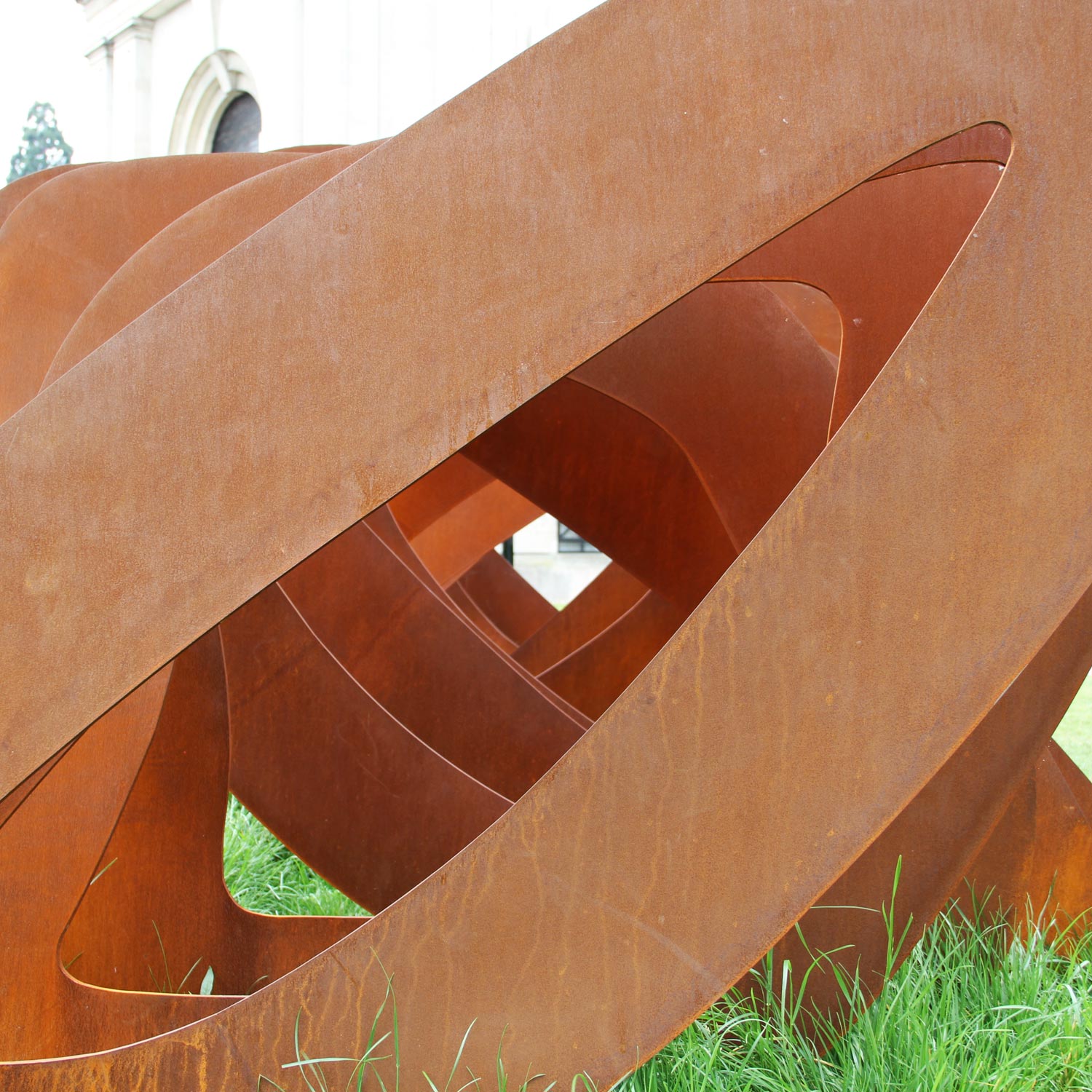
Chief
2010. Corten Steel & enamel paint. 400 (l) x 135 (w) x 170 cm (h)
The timeless word ‘Chief’ aims to provoke reflections on our need for heroes, and this toppled giant, slumped in defeat, alludes to propagandist embodiments of power laid low, the pathos of the heroic body. There is something clearly skeletal about the form, which, just like historical or political reputations, appears and dissolves, depending on one’s point of view.
-
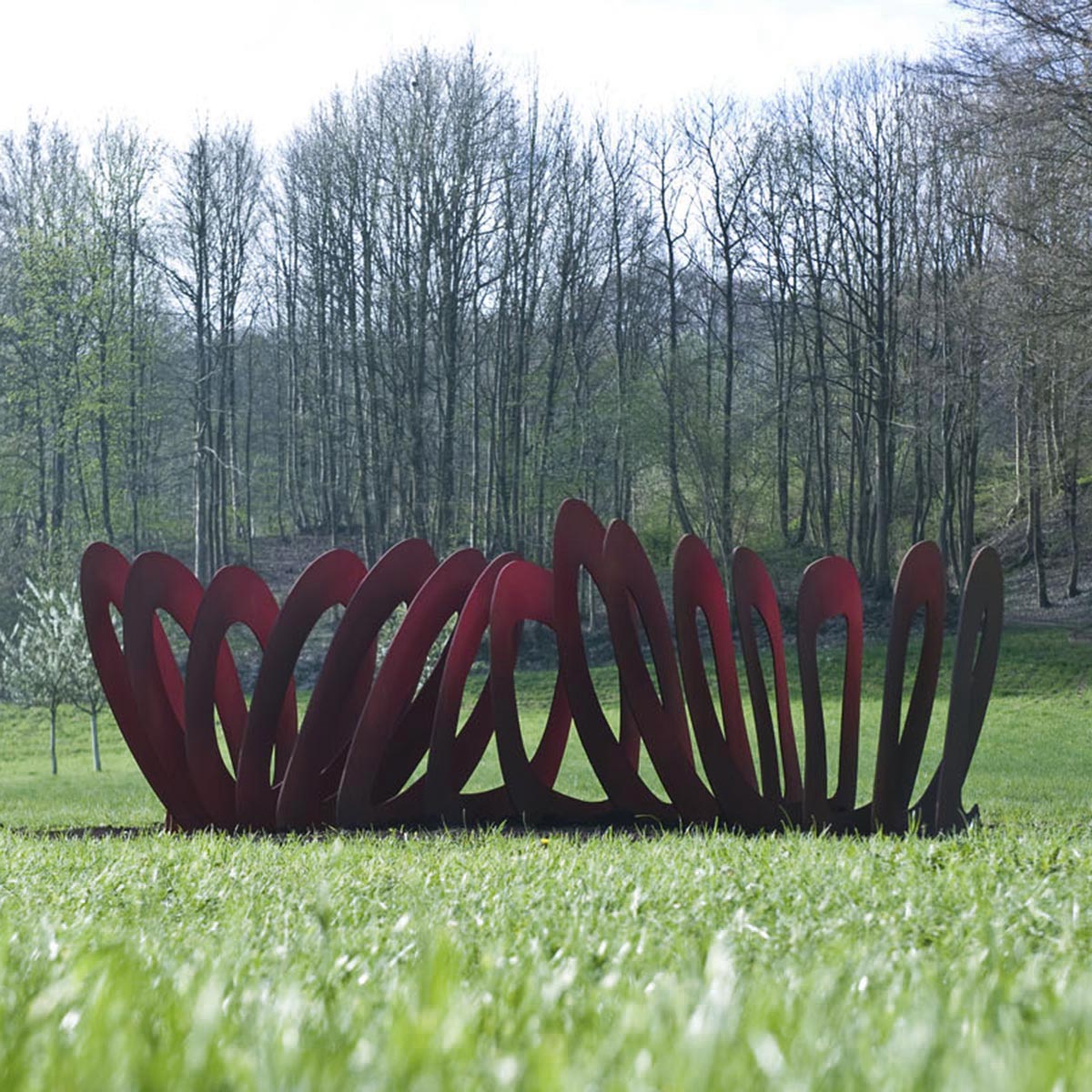
Chief
2010. Corten Steel & enamel paint. 400 (l) x 135 (w) x 170 cm (h)
The timeless word ‘Chief’ aims to provoke reflections on our need for heroes, and this toppled giant, slumped in defeat, alludes to propagandist embodiments of power laid low, the pathos of the heroic body. There is something clearly skeletal about the form, which, just like historical or political reputations, appears and dissolves, depending on one’s point of view.
-
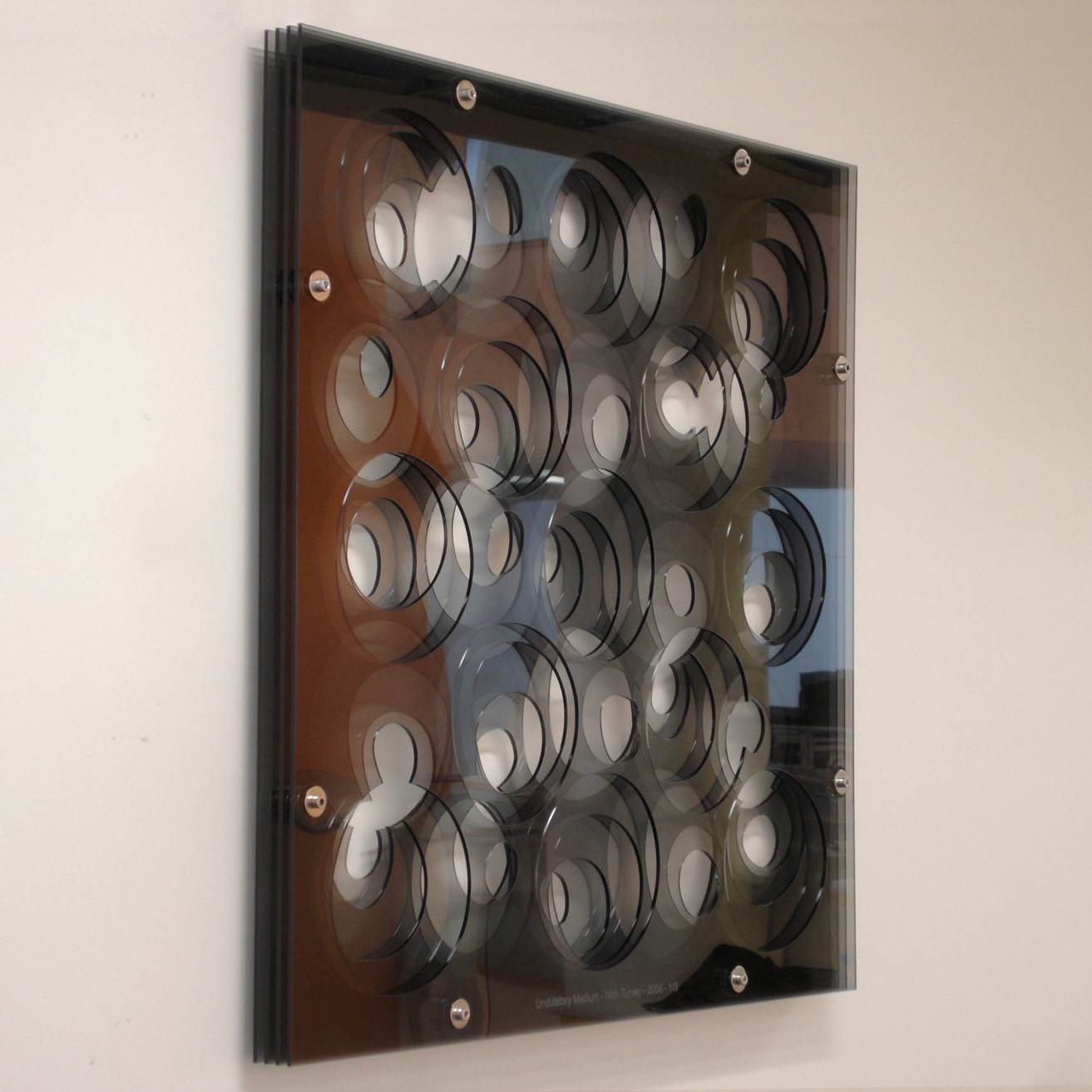
Undulatory Medium
2009. Acrylic and stainless steel. 100 x 100 x 6 cm.
Commission for St. Helens & Knowsley Teaching Hospital. 19th century scientists believed the waveform of light propagated through a resonant medium called the luminiferous aether, which filled the whole of space. Despite the theory falling out of favour, when aether proved undetectable, the idea remains a potent metaphor for rendering tangible the invisible. In this wall sculpture, an array of illusory volumes is created by the surrounding matrix, embodying many different dimensions of movement, oscillation, and rotation.
-
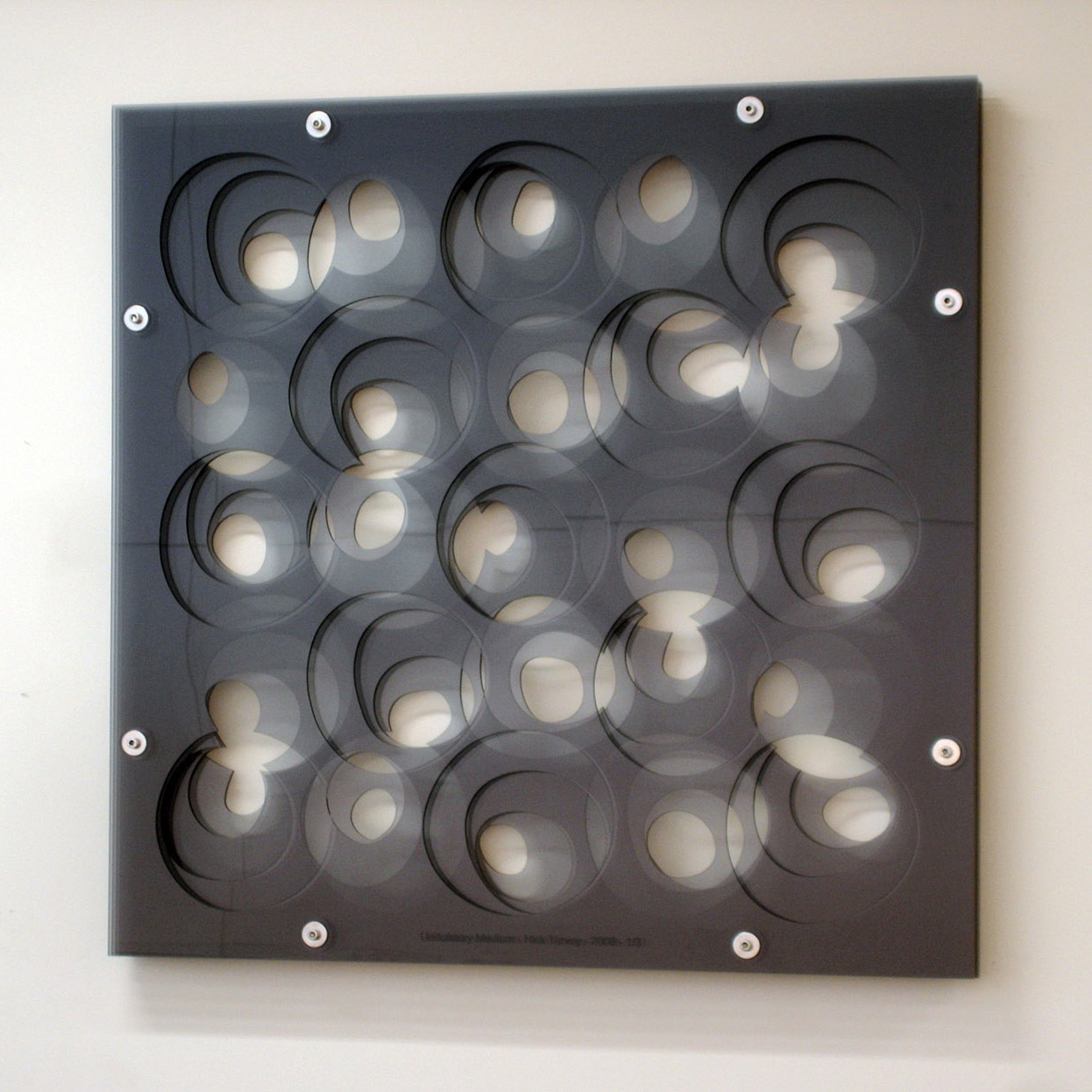
Undulatory Medium
2009. Acrylic and stainless steel. 100 x 100 x 6 cm.
Commission for St. Helens & Knowsley Teaching Hospital. 19th century scientists believed the waveform of light propagated through a resonant medium called the luminiferous aether, which filled the whole of space. Despite the theory falling out of favour, when aether proved undetectable, the idea remains a potent metaphor for rendering tangible the invisible. In this wall sculpture, an array of illusory volumes is created by the surrounding matrix, embodying many different dimensions of movement, oscillation, and rotation.
-
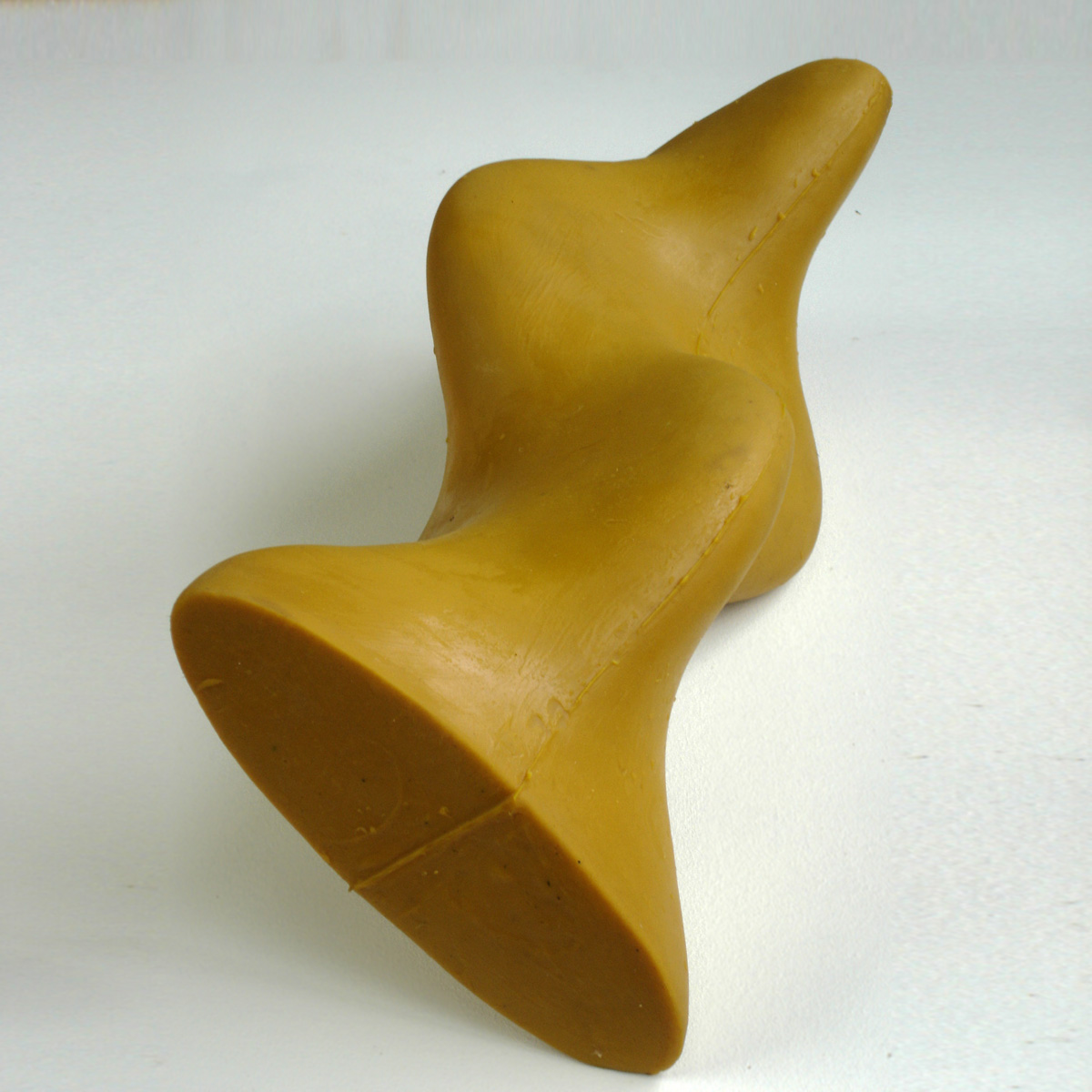
Surrogate
2009. Vinyl rubber. 51 x 24 x 24 cm.
The Incarnate series began with variations and elaborations of a basic undulatory form, much like musical variations on a theme. This base form is a proxy ( or idealised) human body, and the variations aim to catalogue possibilities for the human body considered as an object, both in terms of its constituent materials and their associated properties (an idea that relates to the medieval system of ‘Humours’), but also in the body’s role as a symbol or prop in fetish, myth and propaganda.
-
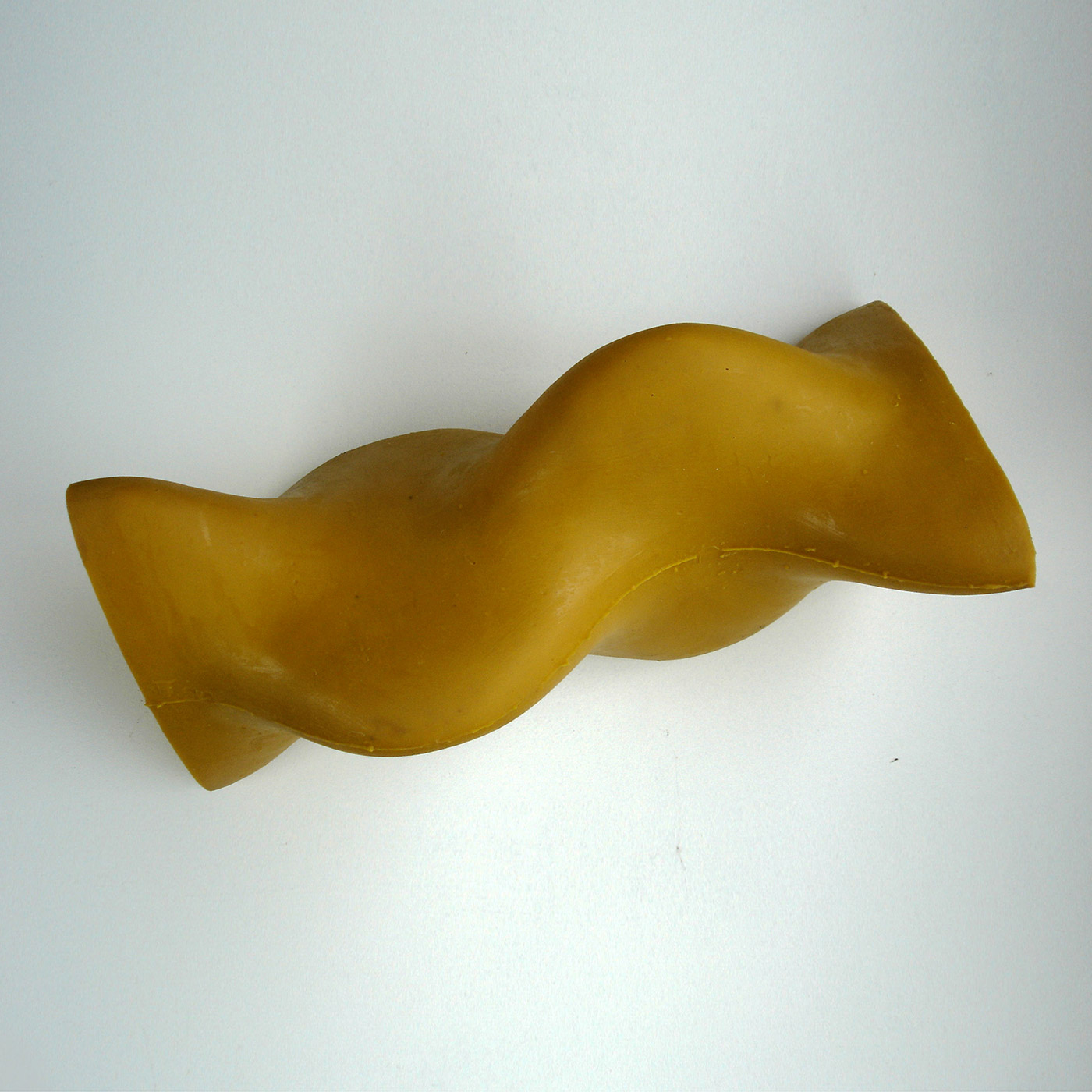
Surrogate
2009. Vinyl rubber. 51 x 24 x 24 cm.
The Incarnate series began with variations and elaborations of a basic undulatory form, much like musical variations on a theme. This base form is a proxy ( or idealised) human body, and the variations aim to catalogue possibilities for the human body considered as an object, both in terms of its constituent materials and their associated properties (an idea that relates to the medieval system of ‘Humours’), but also in the body’s role as a symbol or prop in fetish, myth and propaganda.